Aerial Darshan
Chartered Flight - 03 Days
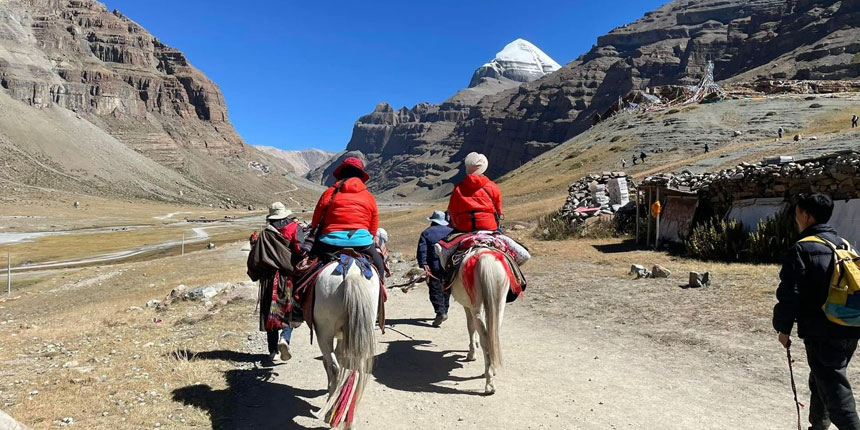
2026 marks the Tibetan Year of the Horse, an extraordinarily auspicious time for undertaking the Kailash pilgrimage. According to Tibetan and Hindu tradition, performing the Kora (circumambulation) in the Year of the Horse is believed to hold the spiritual merit of Thirteen Koras at any other time.
This symbolism runs deep: the Year of the Horse is associated with the birth of Siddhartha Gautama (Buddha Sakyamuni), and it was also the year when the revered saint Milarepa reputedly outstripped his Bon counterpart in a spiritual test at Mount Kailash Tibet Travel and Tours - Tibet Vista Alpine Kailash Trek. For pilgrims, this offers a once-in-a-decade-and-a-half chance to experience amplified blessings, karmic purification, and spiritual transformation.
The Yatra resumed in 2025 after a five-year suspension, and now in 2026 it's fully operational again. This return marks a momentous revival for devotees, long awaiting their turn to embark on this sacred journey.
Moreover, state governments are extending financial support to ease the burden on pilgrims. For example, the government of Uttar Pradesh announced a ₹1 lakh subsidy for its residents, while Haryana is offering ₹50,000. Note: subsidies are typically limited to one per individual per year
2026 introduces greater flexibility in how pilgrims can approach Mount Kailash:
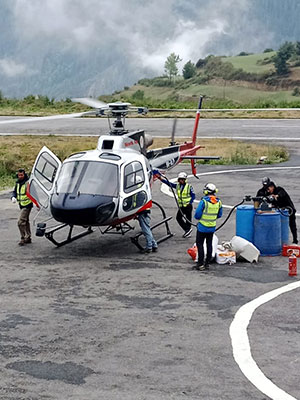
Helicopter-assisted Parikrama: Max Holidays has introduced an inaugural helicopter ride for the parikrama—a 20-minute aerial route over Mount Kailash—making this spiritually significant circumambulation both fast and scenic
Multiple Route Choices:
Overland via Rasuwagadi–Kerung, through scenic Himalayan valleys
From Kathmandu or Lhasa, blending cultural immersion with Tibet’s legendary landscapes
Helicopter routes—from Lucknow or Kathmandu—offering rapid transit to Mansarovar and Mount Kailash with less physical strain
For better planning, tour operators are offering fixed departure dates across the pilgrimage season (May–September). A highly spiritual trend this year is targeting full moon dates, traditionally considered more auspicious:
Overland departures for Indians:
May 25 (full moon) or May 10 (non-full moon)
June 23 / June 7
July 23 / July 5
August 22 / August 9
Helicopter departures: similarly aligned to leverage full moon energy
This clarity helps pilgrims choose between spiritual significance (full moon) and crowd avoidance (non-full moon)
Beyond its religious weight, the 2026 Yatra thrives with deep cultural symbolism:
The Year of the Horse is especially potent not only spiritually but also culturally—energetic, free, and transformative
Saga Dawa festival may coincide with the Yatra (notably around May 31), commemorating Buddha’s birth, enlightenment, and passing—further amplifying the spiritual energy of the pilgrimage
Pilgrims in 2026 benefit from streamlined logistical processes:
Required documents include:
Passport with at least six months’ validity
Registration forms, recent photographs
Fitness certificate, PAN, and for Indians via Kathmandu, voter ID
Group visa and Tibet permit must be processed through authorised operators—they're not available individually
MEA (Ministry of External Affairs) has resumed permit issuance and opened bookings for 2026, facilitating smoother arrangements.
Though not formally part of 2026 plans, the Himachal Pradesh government is proposing opening the Shipki La route (in Kinnaur) for the pilgrimage. This ancient trade pathway, closed since 2020, could potentially offer an easier and culturally rich new route in the future
To improve comfort, state governments are constructing ideal facilitation centers for groups. For example, UP is building facilities to host around 800 pilgrims, with proper lodging, food, and services in batches of 50
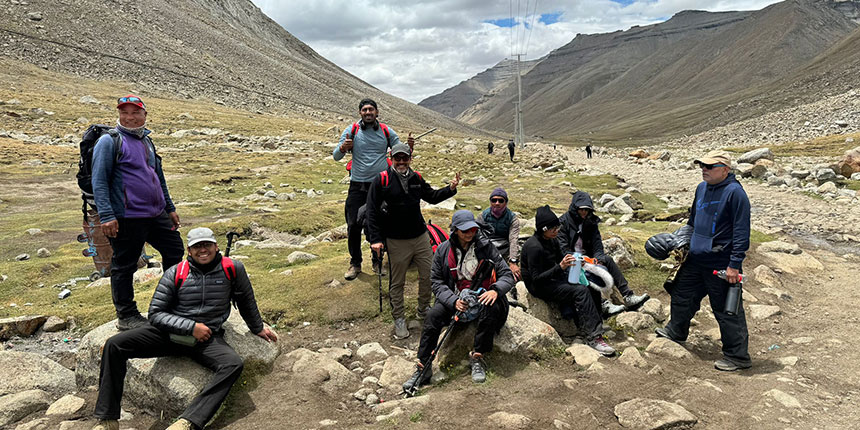
Departure seasons remain May to September, with weather being favorable in Tibet’s rain-shadow region; avoid October to April, when heavy snow and closures occur.
May–June offers moderate temperatures with snow-free roads; nights can still fall to –5 to –10 °C.
Health-wise, pilgrims must prepare for high altitude and carry essentials like oxygen, Diamox, warm clothing, oximeter, medications, etc.
The Kora (circumambulation) remains a full 52 km trek over three days, reaching a high point of Dolma La Pass (5,600+ m)