Aerial Darshan
Chartered Flight - 03 Days

Embarking on the Kailash Mansarovar Yatra is not just a pilgrimage—it’s a spiritual odyssey that connects the soul to the divine energy of Lord Shiva. Nestled deep within the remote region of Tibet, Mount Kailash (6638 m) and the sacred Lake Mansarovar (4550 m) are considered among the most powerful spiritual sites on Earth. Every year, thousands of devotees from India and across the world undertake this journey with a single purpose—to experience divine blessings, inner peace, and self-realisation.
This blog offers complete information about the Kailash Mansarovar Yatra, including enquiry details, routes, eligibility, cost, best time, documents, and essential tips to make your journey safe and successful.
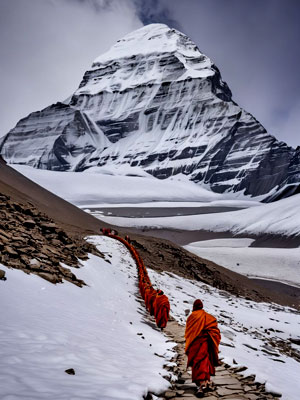
According to Hindu mythology, Mount Kailash is the abode of Lord Shiva and Goddess Parvati. It is said that Lord Shiva resides here in eternal meditation, symbolising the union of cosmic energy and consciousness. For Buddhists, it is the home of Demchok, the symbol of supreme bliss. Jains believe that Rishabhdev, their first Tirthankara, attained liberation (moksha) here. Bon religion followers regard it as the seat of spiritual power.
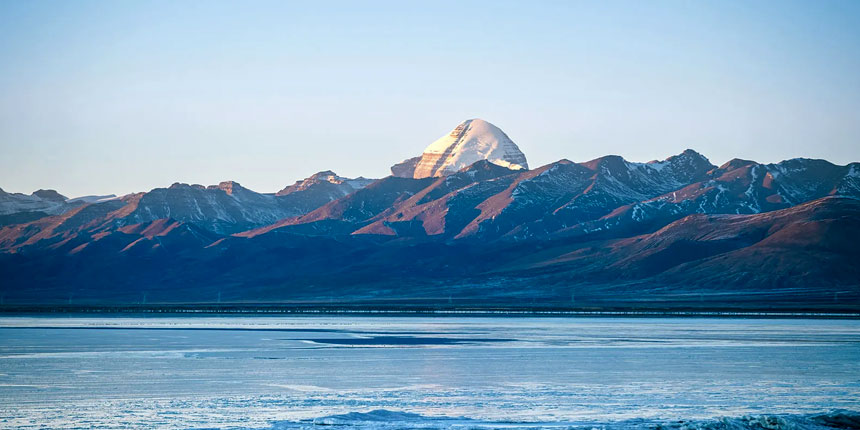
The nearby Lake Mansarovar, formed by the mind of Brahma according to ancient texts, is considered one of the holiest lakes in the world. Pilgrims take a holy dip in Mansarovar, believing it purifies the soul and washes away sins of many lifetimes.
There are two main routes to reach Mount Kailash and Lake Mansarovar:
1. Kailash Mansarovar Yatra via Lipulekh Pass (Organised by MEA, Govt. of India)
Managed by the Ministry of External Affairs (MEA), Government of India.
Starts from Delhi and passes through Almora, Dharchula, Gunji, and Lipulekh Pass (Uttarakhand) into Tibet.
Duration: 24–26 days
Approx. Cost: ₹1.7 to ₹2 lakh (subsidised by government)
Mode: Trekking & Road journey with limited helicopter use.
Recommended for fit and experienced trekkers.
2. Kailash Mansarovar Yatra via Nepal (Private Operators Route)
Conducted by authorised private travel companies such as WOO Adventures.
Route: Kathmandu → Nepalgunj → Simikot → Hilsa → Taklakot (Tibet) → Mansarovar → Mount Kailash
Duration: 10–14 days
Approx. Cost: ₹2.5–3.5 lakh (depending on accommodation, flight, and package type)
Mode: Helicopter + Road (most popular and comfortable route)
This route is faster, smoother, and suitable for pilgrims of all ages (subject to health conditions).
Before you register, it’s important to understand the eligibility and health requirements for the Yatra.
✅ Eligibility:
Must be an Indian citizen or NRIs (in certain cases).
Age: 18–70 years.
Physically fit and mentally strong for high-altitude conditions.
Must possess a valid passport with at least 6 months’ validity.
✅ Medical Fitness:
You’ll need a medical fitness certificate from authorised hospitals.
Oxygen levels, blood pressure, ECG, and other vital tests are mandatory.
High-altitude acclimatisation is essential as oxygen levels are low beyond 12,000 ft.
Original Passport (valid for 6 months or more)
4–6 Passport-size photographs
PAN and Aadhaar Card
Medical fitness certificate
Undertaking form and insurance copy
Visa and travel permit (arranged by your tour operator or MEA)
The most sacred ritual of the Yatra is the Kailash Parikrama (Kora)—a 52 km trek around Mount Kailash. Devotees believe that completing this parikrama brings liberation (moksha) and washes away sins of lifetimes.
Details:
Total Distance: 52 km
Duration: 3 days
Highest Point: Dolma La Pass (5630 m)
Difficulty Level: Moderate to Tough
Many pilgrims also perform a spiritual parikrama of Lake Mansarovar (90 km), usually done by vehicle or on foot depending on stamina and time.
The Helicopter route via Nepal is the most comfortable and time-saving option, especially for elderly pilgrims.
It covers the major portion of the journey by air, minimising the trekking difficulty.
Route Overview:
Kathmandu → Nepalgunj → Simikot → Hilsa → Taklakot → Mansarovar → Darchen → Mount Kailash Parikrama
Duration: 9–12 days
Altitude: Up to 19,500 ft
Cost: ₹2.75–3.25 lakh (approx.)
Includes: Accommodation, meals, Tibet permit, oxygen support, guide, and support staff.
The Yatra is organised from May to September every year when the weather is clear, and mountain passes are open.
Here’s a quick overview:
| Month(s) | Weather | Highlights |
|---|---|---|
| May–June | Pleasant & clear skies | Best time for early batches |
| July–August | Mild rainfall, lush views | Lake Mansarovar at its most beautiful |
| September | Cool & dry | Perfect for photography & peaceful darshan |
Avoid travelling during late September–October due to sudden snow and cold winds.
| Route | Duration | Approx. Cost (INR) | Mode |
|---|---|---|---|
| Via Lipulekh (MEA) | 24–26 days | ₹1.7–2.0 lakh | Trek + Road |
| Via Nepal (Helicopter) | 10–12 days | ₹2.8–3.5 lakh | Helicopter + Road |
| Via Lhasa (Luxury Route) | 13–15 days | ₹3.5–4.5 lakh | Flight + Road |
Note: Cost varies based on group size, accommodation (standard/luxury), visa fees, and currency exchange rates.

Here’s what every pilgrim must carry for comfort and safety:
Clothing:
Thermal innerwear, windproof jacket, woollen gloves, muffler, cap
Trekking shoes (waterproof, high ankle)
Sunglasses, sunscreen, lip balm, moisturizer
Raincoat, warm socks, light towels
Personal & Medical:
Basic medicines (headache, fever, altitude sickness)
Oxygen cylinders or portable cans
Water purification tablets
Snacks, dry fruits, glucose powder
Documents & Essentials:
Passport, ID proof, visa
Cash (INR & Chinese Yuan)
Extra passport-size photographs
Power bank, camera, torch
1. Book early: Yatra permits are limited, so book 3–4 months in advance.
2. Acclimatise properly: Spend 1–2 days in Kathmandu or Simikot to adapt to altitude.
3. Stay hydrated: Drink plenty of water; avoid alcohol or smoking.
4. Follow your guide’s instructions carefully.
5. Carry basic medicines even if you feel fit.
6. Respect Tibetan customs and local rules.
7. Travel with an experienced tour operator like Max Holidays for reliable arrangements.
Many pilgrims describe the Kailash Mansarovar Yatra as life-transforming. The silence of the mountains, the reflection of Kailash on Mansarovar’s waters, and the energy felt during the Parikrama cannot be expressed in words. Some say it feels as if Lord Shiva himself guides every step of the journey.
Even a glimpse of Mount Kailash is said to cleanse the soul and awaken inner consciousness.
For Government Route (MEA):
Apply through the official website of the Ministry of External Affairs
Fill the online application form and submit necessary documents.
Selected pilgrims are notified after medical tests and verification.
For Private Routes via Nepal:
Contact authorised private tour operators like WOO Adventures Pvt. Ltd.
Choose your route (Helicopter/Luxury/Overland).
Submit passport and other documents for visa and Tibet travel permits.

If you’re planning to join the Kailash Mansarovar Yatra, it’s best to make your enquiry early. The slots get filled quickly due to limited travel permissions from Tibet authorities.
Yatra dates and batches
Helicopter vs Overland route comparison
Visa & permit process
Medical preparation guidance
Group discounts and custom packages
Enquiry Now: Connect with WOO Adventures Pvt. Ltd., a trusted Kailash Yatra organiser, for all-inclusive packages with safety, comfort, and spiritual care.
📧 Email: support@wooadventures.com
🌐 Website: www.kmyatra.org
📞 Helpline: +91 8800160046