Aerial Darshan
Chartered Flight - 03 Days
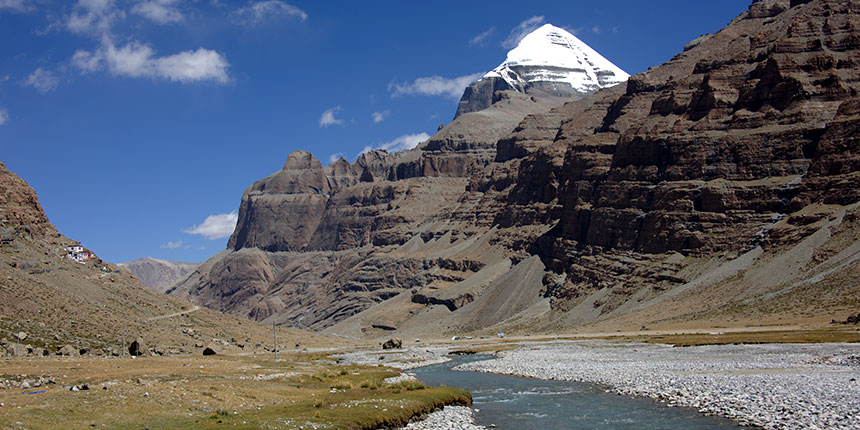
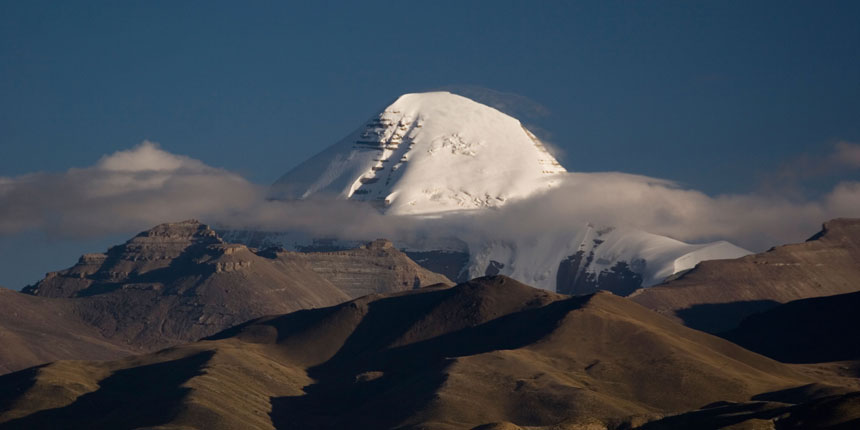
Mount Kailash—Kang Rinpoche to Tibetan Buddhists, Gang Tise to geographers—sits like a carved monolith at the heart of the Trans-Himalaya. From afar, it looks improbably geometric: four sweeping faces, snow-limned ridges that appear to meet like the edges of a giant, natural pyramid. Pilgrims from four major faiths (Hinduism, Buddhism, Jainism, Bön) have circumambulated it for centuries. Scientists, meanwhile, have mapped, measured, and modeled—and yet in 2026, Kailash still guards a handful of genuine puzzles. Some are myths that refuse to die. Others are legitimate, open research questions at the frontiers of geology, glaciology, and high-altitude biology.
Below is a fresh, balanced look at what we know, what we don’t, and why this mountain keeps both devotion and discovery alive.
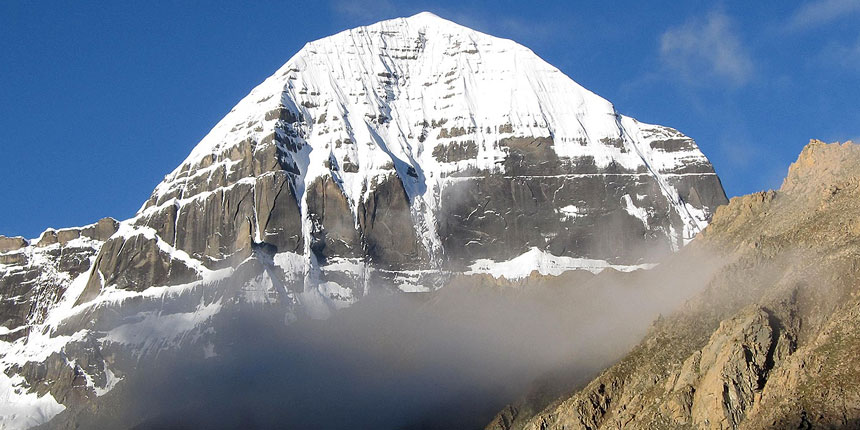
What we see: From many vantage points, Kailash looks strikingly symmetrical, as if engineered. The vertical striations, planar faces, and a summit that seems neatly squared off feed countless claims about “perfect geometry.”
What science says: Kailash is carved largely from ancient sedimentary and metamorphic rocks uplifted with the Trans-Himalayan batholiths. Its tactile “pyramid” form is a product of differential erosion: ice and freeze-thaw cycles exploit joints and bedding planes, trimming weaker layers faster than stronger ones. Similar “accidental symmetry” appears in other alpine horns (think Matterhorn), where cirque glaciers gnaw at a peak from multiple sides and leave a deceptively tidy pyramid.
What’s still curious: Two things keep geomorphologists leaning in:
Persistent linearity. Kailash exhibits unusually straight ridgelines and faces over long distances for a peak beaten by frost and wind for millions of years. The working hypothesis is that rock fabric—the pre-existing orientation of fractures and foliations—channels erosion in unusually consistent directions. High-resolution drone photogrammetry and LiDAR, still sparse in the region, could quantify just how linear those faces really are, and whether Kailash is an outlier or a textbook case amplified by perspective.
Scale and slope breaks. Satellite slope maps hint at terraces or “breaks in slope” that may not match simple glacial sculpting. Are these relics of ancient, stabilized rockfalls? Or are they structural benches defined by resistant strata? The data are promising; access and altitude remain the challenge.
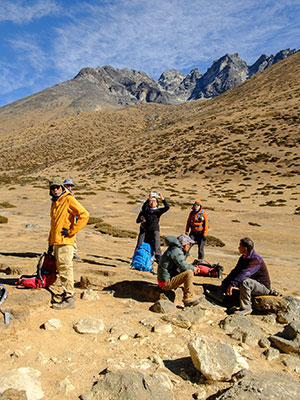
The claim: You’ve likely heard it: “Even aircraft can’t fly over Kailash.” This is a popular internet staple.
The reality: There is no scientific evidence or published aeronautical restriction that uniquely forbids aircraft over Kailash beyond the usual high-altitude safety, terrain, and airspace control considerations typical of the Himalaya and Tibet. The myth persists because it feels right—Kailash looks unapproachable, so our stories make it so.
The real mystery nearby: High-mountain weather around Kailash can pivot fast. Mesoscale systems—tiny compared to continental storms—spin up severe turbulence and rotors (rolling air masses) downwind of sharp ridgelines. In 2026, atmospheric physicists still wrestle with predicting microturbulence over complex terrain at minute-by-minute timescales. Newer cubesats, denser reanalysis grids, and machine-learned nowcasts are improving this, but forecasting the exact moment a calm sky hardens into a wall of gusts is a work in progress.
The claim: “Compasses go crazy near Kailash; cameras fail; the mountain is a magnet.”
What instruments show: Handheld compasses can misbehave in many mountain regions due to local magnetic anomalies—iron-rich rocks, magnetite veins, or simply the instrument being too close to metal gear. Batteries also drain faster in cold, low-oxygen conditions, which looks mystical when you’re shivering at 5,000 meters.
What’s genuinely open: The Trans-Himalaya hosts complex magnetic signatures from deep crustal bodies and past tectono-magmatic events. There’s scope for aeromagnetic and ground magnetotelluric surveys to produce a crustal conductivity model around Kailash. Not because of paranormal expectations, but because understanding the deep structure could illuminate how this segment of the plateau rose and why stress patterns created such persistent, linear rock fabrics. In other words, the mystery is geodynamic, not supernatural.
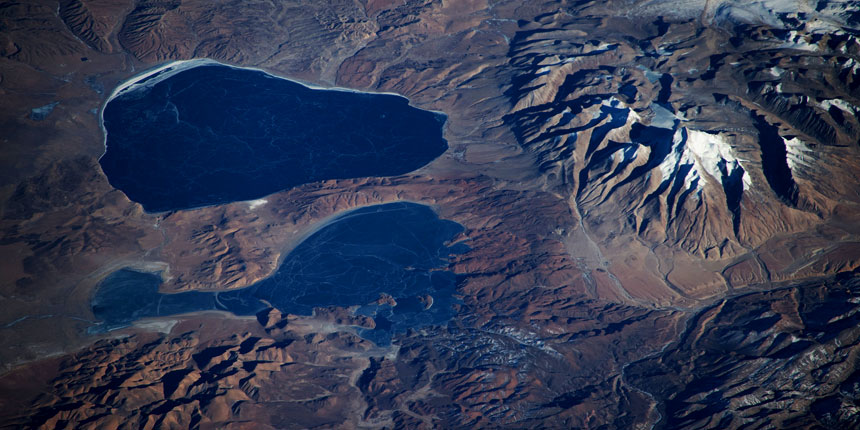
A stone’s throw south of Kailash sit two iconic lakes: Manasarovar (fresh) and Rakshastal (saline), separated by a narrow isthmus. On maps, they almost touch; in folklore, they represent light and shadow, merit and challenge.
The hydrological oddity: How do two adjacent basins maintain such different chemistries? Modern hydrology points to:
Distinct catchments and seepage patterns. Subtle differences in groundwater connectivity mean one lake flushes and renews faster, while the other concentrates salts.
Wind and evaporation regimes that differ enough—lake size, orientation, and seasonal ice cover—to tip the balance.
What’s unresolved: A complete water balance remains hard to pin down. We still lack year-round, high-frequency measurements of inflow, outflow (including subterranean seepage), precipitation, evaporation, and ice phenology. 2026’s satellite constellations (remote altimetry, thermal bands that estimate evaporation, and gravimetry proxies) are better than anything before, but short, intense monsoon bursts and winter sublimation make modeling delicate. For a mountain revered as the navel of four great rivers (Indus, Sutlej, Brahmaputra, and Karnali/Ganges systems), nailing the micro-hydrology of its twin lakes is more than academic—it improves regional climate models downstream.
While much of High Asia’s ice is retreating, some pockets buck the trend. Glaciologists call it the “Karakoram anomaly,” but Kailash sits east of that zone. Here, too, the story is nuanced: several small glaciers feeding the area’s headwaters show asynchronous behavior—some thinning steadily, others stagnating, a few seemingly stable over short intervals.
Why it’s hard: Small cirque glaciers wrap around shaded, steep bowls. Debris cover—a blanket of rock fragments—can insulate ice from melting, while in other places it enhances melt by absorbing sunlight. Add in wind-redistributed snow, avalanching from headwalls, and microclimates created by lake-effect breezes, and you get a patchwork of trends.
The open question: Sub-kilometer climate gradients—changes in temperature, snow, and humidity over just a few hundred meters—are still under-observed. Until autonomous weather stations and repeat drone surveys span several years, we won’t fully explain why one hanging glacier clings to the cliff while its neighbor withers.
Pilgrims often report startling bursts of life at improbable heights—a cushion of alpine flowers, hardy beetles under a stone, or migratory birds knifing through thin air. None of that is fantasy; the Kailash region hosts micro-oases sustained by snowmelt trickles and mineral-rich seepage.
The frontier: Biologists in 2026 are fascinated by:
Microbiomes in permafrost and glacier cryoconite. These pockets host microbes that fix carbon and nitrogen under extreme UV exposure, cold, and desiccation—analogs for Martian or icy-moon life. The mystery is not that microbes exist, but how their metabolisms and DNA repair pathways endure decades of freeze-thaw.
Hypoxia adaptations. Pikas, wild asses, bar-headed geese, and even hardy highland yak show genetic and physiological tricks for oxygen-starved living. But the community ecology—how plants, insects, and vertebrates time their life cycles to the erratic pulse of snowmelt—remains a moving target as the climate shifts.
Many travelers notice “alignments”: sunrise rays splitting a ridge on solstices, shadow lines pointing toward monasteries, or cairns and prayer flags lining up with uncanny neatness. Some patterns are genuine—monasteries often occupy geomantically favored sites with clear views and stable ground—and the sun does dramatic things with a clean, angular skyline.
Yet humans are pattern-hungry. We’re primed to see significance in symmetry and to line up stones along easy paths. The live mystery for cognitive scientists isn’t whether alignments are “real,” but why the Kailash setting amplifies them: the altitude heightens sensation; the stark geometry offers crisp visual cues; the pilgrimage mindset directs attention. In this sense, Kailash is both a mountain and a laboratory for meaning-making.
Kailash is famously unclimbed out of respect; attempts have been discouraged by local communities and authorities. For some, that’s a spiritual boundary. For scientists, it’s a methodological constraint—and a creative opportunity.
Without summit expeditions, researchers lean on remote methods:
InSAR (satellite radar). Measures millimeter-scale ground movement to infer rockfall hazard and glacier flow.
Muography (cosmic-ray imaging). Still experimental in high mountains, it could one day sketch the internal density of peaks like Kailash from safe peripheries.
Edge-to-edge photogrammetry. Repeated, seasonally timed drone flights around the periphery build 3D models and track subtle changes.
The unresolved piece: Can we achieve “summit-quality” science without ever touching the top? Increasingly, yes—but it asks us to innovate, to accept data gaps gracefully, and to fold cultural consent into research design. That, too, is a modern mystery: learning where curiosity ends and reverence begins.
Those who walk the kora (parikrama)—a ~52 km circumambulation—often report a mental clarity that outlasts the trip. Strip away the poetry and there’s still a genuine question: what does sustained moderate hypoxia, slow rhythmic walking, and the cognitive frame of intention do to the brain?
Small studies on other high-routes suggest:
Neurochemical shifts (changes in dopamine and serotonin pathways) under steady exertion.
Altered time perception in low-oxygen, low-distraction environments.
Sleep architecture changes that, paradoxically, can leave pilgrims feeling both fatigued and sharpened.
We don’t yet have a Kailash-specific longitudinal dataset. But the pattern hints at a “threshold effect”—when environment and ritual cross a personal boundary, subjective experience transforms. That’s not pseudoscience; it’s a hard-to-measure corner of psychology that Kailash reliably evokes.
Why this exact shape, here? We can model uplift and erosion in broad strokes, but reproducing Kailash’s precise facets in silico is an unsolved inverse problem.
Twin-lake bookkeeping. Closing the hydrologic budget of Manasarovar and Rakshastal across seasons remains a data desert waiting to be irrigated.
Microclimate mosaics. Explaining glacier-by-glacier fates needs denser, long-term observations than exist right now.
Deep structure. A high-resolution conductivity and magnetic model could tie rock fabric to surface form—and might finally settle whether Kailash’s symmetry is rare or just beautifully revealed.
For pilgrims planning a 2026 yatra, the science doesn’t shorten the climb or thin the air. But it can deepen the awe. Knowing that those clean lines are the patient work of ice, that the lakes beside you keep separate ledgers of salt and light, that microbes are writing survival manuals in every patch of snow—this knowledge doesn’t replace the sacred story. It braids with it.
And for scientists, Kailash is a reminder that some questions require more than clever instruments. They need permission, restraint, and humility. The mountain has taught generations that not every summit must be stepped on to be understood. In 2026, that feels like the freshest lesson of all.