Aerial Darshan
Chartered Flight - 03 Days
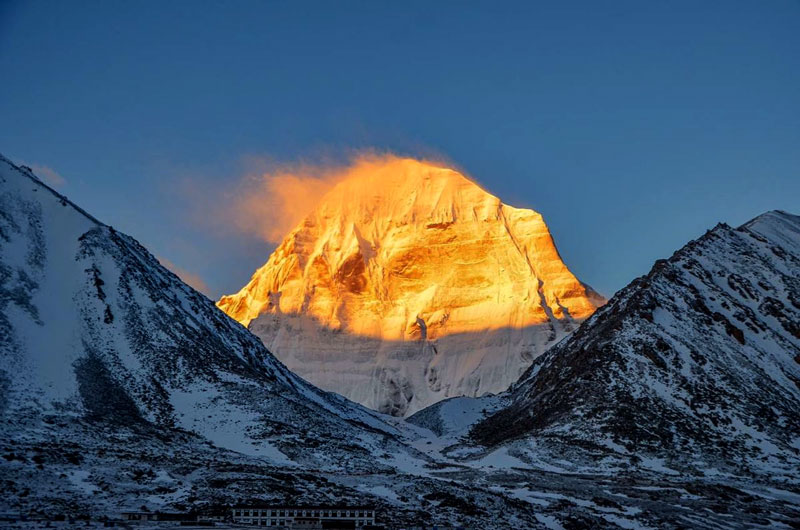
Mount Kailash and Lake Mansarovar — tucked deep within the Tibet Autonomous Region (China) — represent one of the most spiritually profound pilgrimage destinations on the planet. Each year, thousands of devout Hindus, Buddhists, Jains, and followers of Bon undertake this sacred yatra (journey), seeking blessings, purification, and a transformative spiritual experience.
For travellers from Singapore, planning this journey requires careful coordination of international flights, visas and permits, overland travel, accommodation, acclimatisation and high-altitude preparedness. This guide maps the entire process clearly, step-by-step.
Mount Kailash (elevation 6,638 meters / 21,778 feet) stands in the western part of Tibet and is considered the abode of Lord Shiva in Hindu belief and a sacred site in Buddhism, Jainism, and Bon traditions. Lake Mansarovar, nearby at 4,590 meters, is believed to purify sins and bestow spiritual merit upon pilgrims.
The pilgrimage includes visits to these sites and typically the Kailash Kora — a 52-kilometre circumambulation on foot around the base of the mountain.

The first major step for any Singaporean traveller is reaching either:
A. Kathmandu, Nepal
⦿ A direct flight from Singapore Changi Airport (SIN) to Kathmandu (KTM) takes about 5–6 hours.
⦿ Singapore passport holders do not require a visa to enter Nepal.
Kathmandu is a very popular gateway for pilgrims because it offers easier road access into Tibet later in the journey and is a transport hub with unlimited onward tour options.
B. Directly to China / Tibet (Lhasa or Mainland China)
⦿ Singaporean travellers may take flights to major Chinese cities such as Chengdu, Chongqing, Beijing, or Shanghai.
⦿ From these cities, one can either fly to Lhasa (Tibet’s capital) or take scenic train routes to reach Tibet.
There are some direct flights connecting Singapore to Lhasa via Chinese cities (for example via Chongqing).
Before your yatra, ensure all entry authorisations are in order:
A. Chinese Visa / Group Visa
⦿ If you enter Tibet from Nepal, you usually need a Chinese Group Visa — a special visa processed in Kathmandu by travel agencies for pilgrims.
⦿ For those entering via the Chinese mainland, a standard Chinese visa is required if your travel exceeds your visa-free stay period.
B. Tibet Travel Permit
Because Mount Kailash lies in a restricted area of Tibet, all visitors must obtain a Tibet Travel Permit issued by the Tibet Tourism Bureau.
C. Alien’s Travel Permit & Military Area Entry Permit
In addition to the travel permit, travellers need:
⦿ Alien’s Travel Permit (ATP)
⦿ Military Area Entry Permit
These are required because Kailash is located near strategic border regions within Tibet.
👉 These permits are typically arranged through travel operators — individual applications are not accepted for Kailash tours.
There are three primary routes pilgrims from Singapore use to reach Mount Kailash and Lake Mansarovar:
This is the most popular and recommended route for Singaporeans.
Step-by-Step Overview
1. Fly Singapore → Kathmandu
⦿ Enter Nepal without visa.
2. Kathmandu Domestic / Road Transfer
⦿ Overnight in Kathmandu to rest and complete paperwork.
3. Overland to Nepal-Tibet Border
⦿ Cross at Gyirong / Kyirong border (popular port).
⦿ Travel from Nepal into Tibet by road in private jeeps or coaches
4. Tibet Land Journey → Saga → Mansarovar → Darchen
⦿ This long road journey passes remote high-altitude plains and foothills, leading ultimately to the base camp of Everest for Kailash Parikrama.
Advantages
⦿ Allows gradual altitude acclimatisation.
⦿ Greater cultural immersion.
Disadvantages
⦿ Longer travel time than flying directly into Tibet.
This is the most popular and recommended route for Singaporeans.
Step-by-Step Overview
1. Fly Singapore → Chinese City → Lhasa
⦿ Transit via Chengdu, Chongqing, Beijing, or Shanghai.
⦿ Fly or train to Lhasa.
2. Lhasa → Shigatse → Saga → Mansarovar → Darchen
⦿ Lhasa → Shigatse → Saga → Mansarovar → Darchen
Advantages
⦿ Faster overall journey if a direct flight to Lhasa is available.
⦿ Good acclimatisation options by staying a few days in Lhasa.
Disadvantages
⦿ Requires careful Chinese visa planning if outside the 15-day visa-free window.
This is a non-traditional option where pilgrims simply take a flight that offers aerial views of Mount Kailash and Lake Mansarovar, without physically entering Tibet.
It’s ideal for travellers with limited time or mobility concerns. This approach does not involve ground-based Kailash rituals or kora.
A typical full Kailash Mansarovar Yatra might involve:
Day 1–2: Travel from Singapore to Kathmandu
⦿ Flight to Nepal.
⦿ Rest-overnight and meet your travel group / agency rep.
Day 3–5: Cross into Tibet via Nepal
⦿ Road journey from Kathmandu to border and into Tibet.
⦿ Permit checks and border formalities.
Day 6–10: Journey within Tibet
⦿ Visit iconic sites: Saga, Lake Mansarovar.
⦿ Acclimatisation days.
Day 11–14: Kailash Parikrama (Kora)
⦿ 3-day sacred circumambulation around Mount Kailash.
Final Departure Days
⦿ Return to Kathmandu or continue via Lhasa back to Singapore.
Total Days: ~10–14 days (depends on route and itinerary).
The ideal time to plan this yatra from Singapore is April to October — when weather in western Tibet is less extreme and travel routes are generally open
Physical and Medical Prep
⦿ This pilgrimage involves high altitudes — basic fitness and acclimatisation are crucial.
⦿ Carry a medical certificate confirming fitness for high-altitude travel.
Travel Insurance
⦿ Comprehensive travel and medical insurance is essential — including coverage for altitude sickness and evacuation.
Packing Essentials
⦿ Warm clothing layers
⦿ Good trekking shoes
⦿ Altitude medication
⦿ Hydration and snacks
Estimated Cost
⦿ Depending on the operator, inclusions, and route, this yatra can cost USD 3,000 – USD 6,000 (or more) per person.
Booking Tips
⦿ Book 4–6 months in advance to secure permits and preferred travel dates.
⦿ Choose an experienced operator that handles all visas/permits.
Respect local customs:
⦿ Dress modestly
⦿ Remove shoes when required
⦿ Follow guides and monastery rules
Understanding local traditions enhances the spiritual experience.
Ans. Yes, Canadian citizens are allowed to visit Mount Kailash and Lake Mansarovar. However, independent travel is not permitted. Canadians must travel in a group through an authorized tour operator and obtain special Chinese and Tibetan permits.
Ans. The Nepal route via Kathmandu is the best and most recommended option for Canadian travelers. It offers smoother logistics, better acclimatization, and easier visa processing compared to Indian routes.
Ans. Yes, a Chinese Group Visa is mandatory for the Kailash Mansarovar Yatra. Individual Chinese visas are not accepted. The group visa is issued in Kathmandu through the tour operator.
Ans. Yes, all foreign nationals, including Canadians, require a Tibet Travel Permit, along with additional restricted area permits. These permits are arranged only by authorized tour operators.
Ans. No, independent travel is strictly prohibited. Mount Kailash lies in a restricted region of Tibet, and foreign travelers must be part of an organized group tour approved by Chinese authorities.