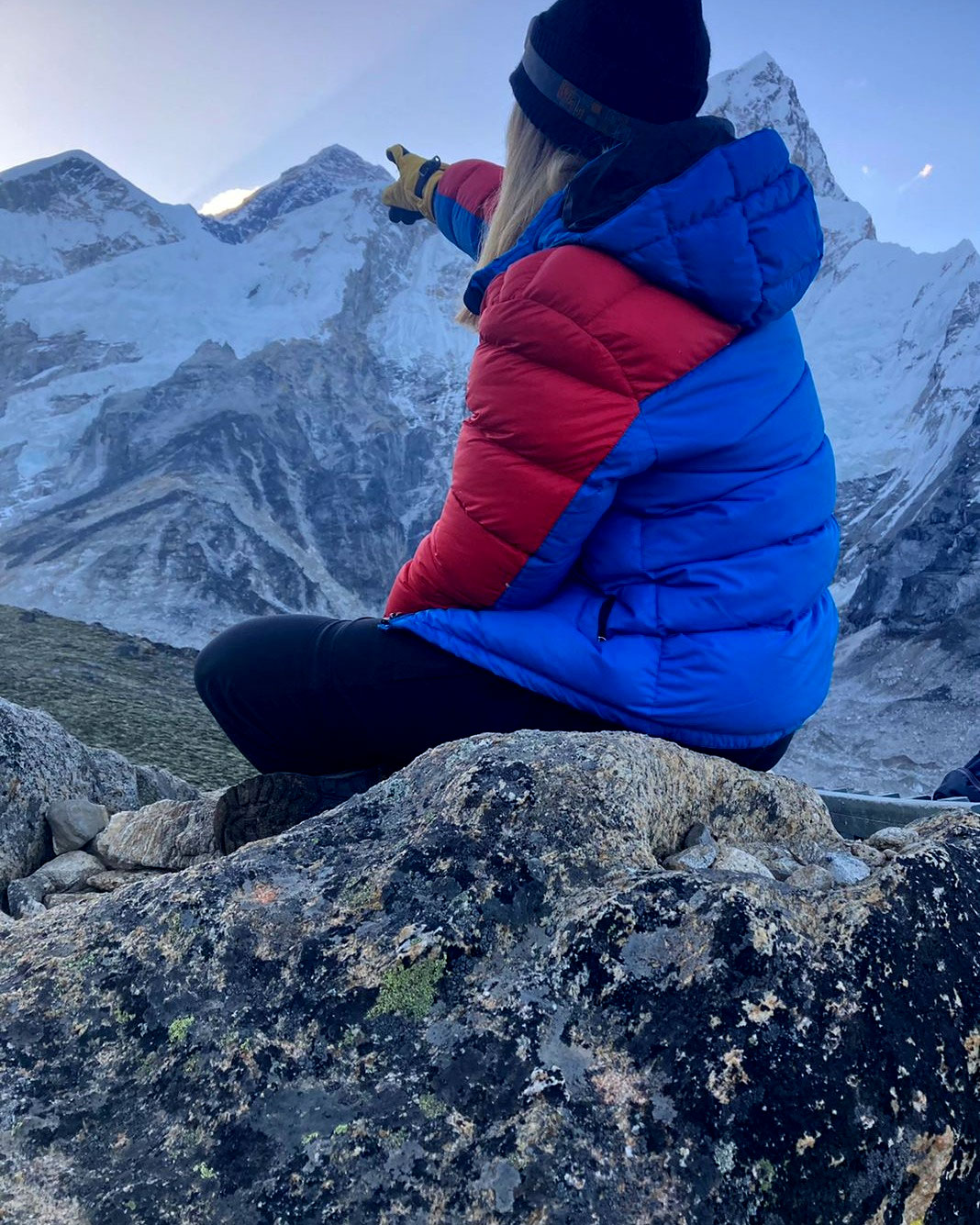
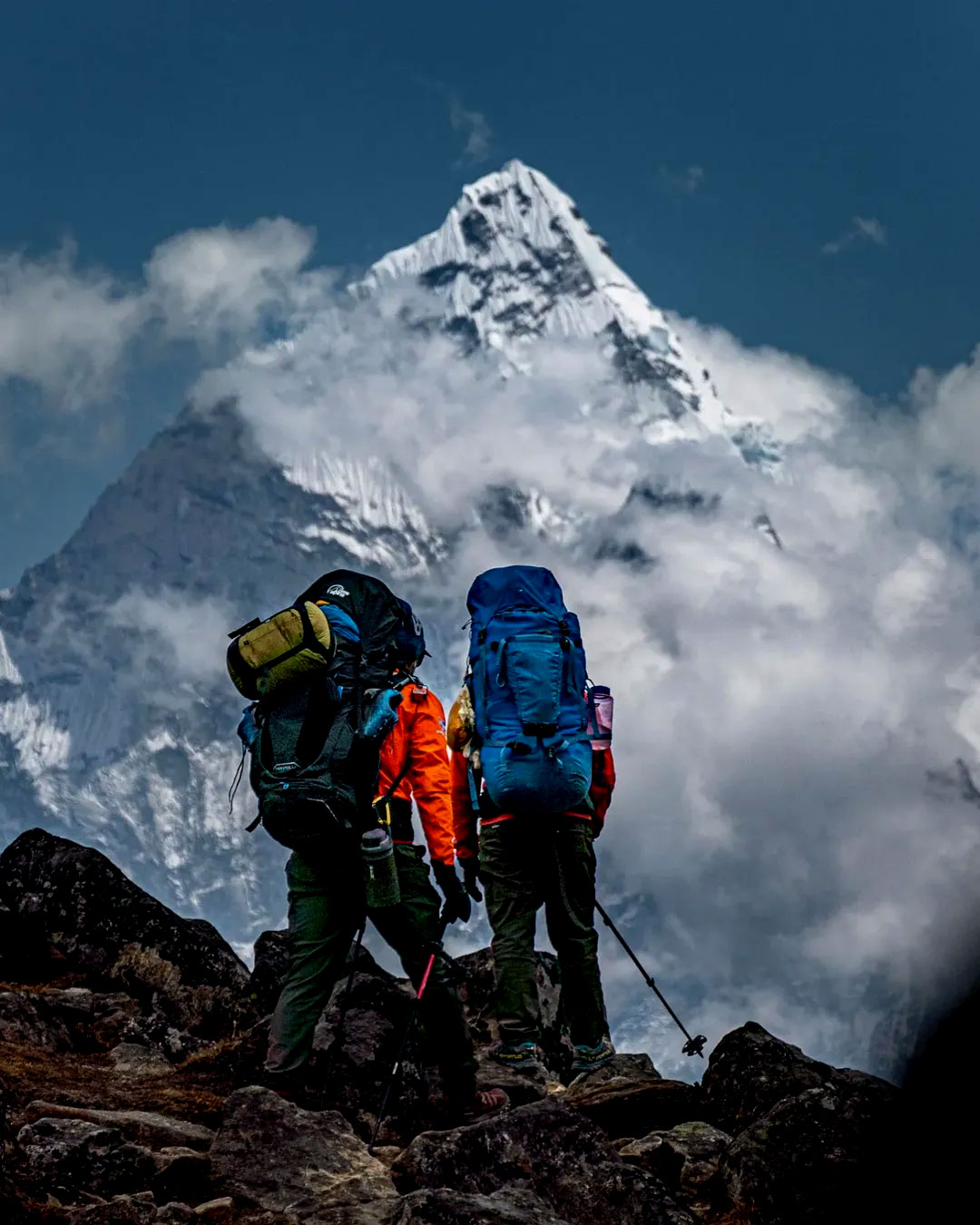
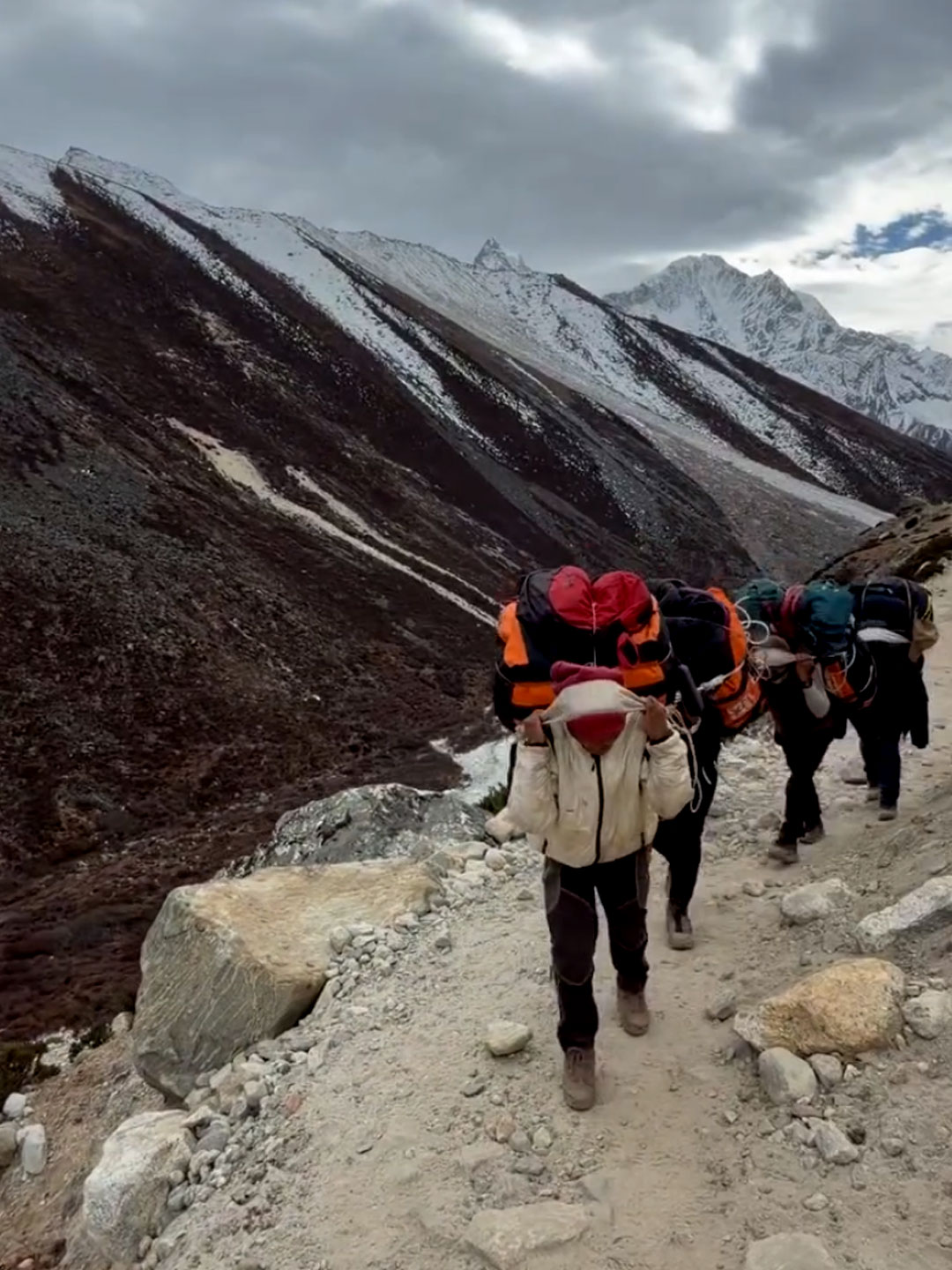
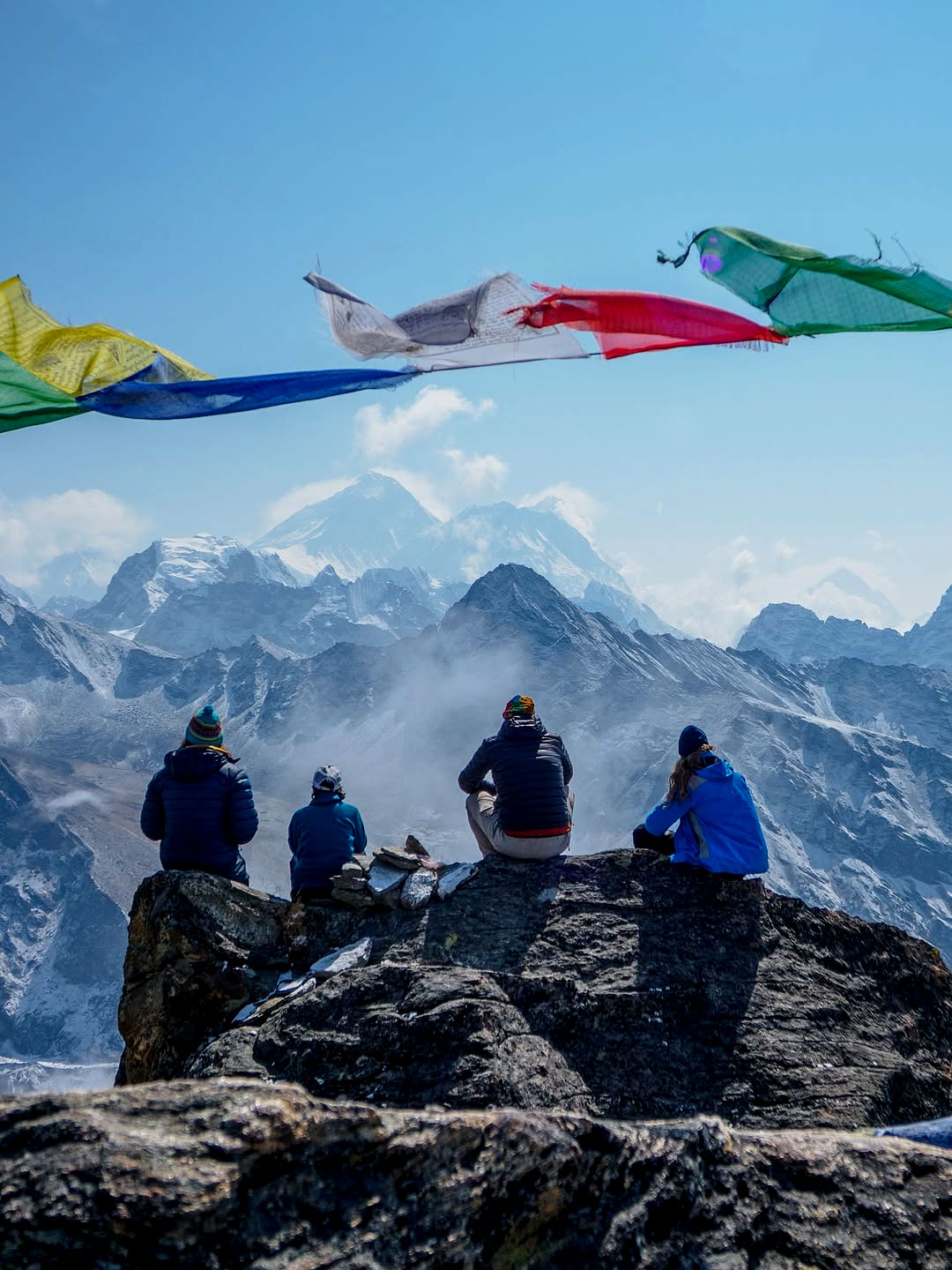
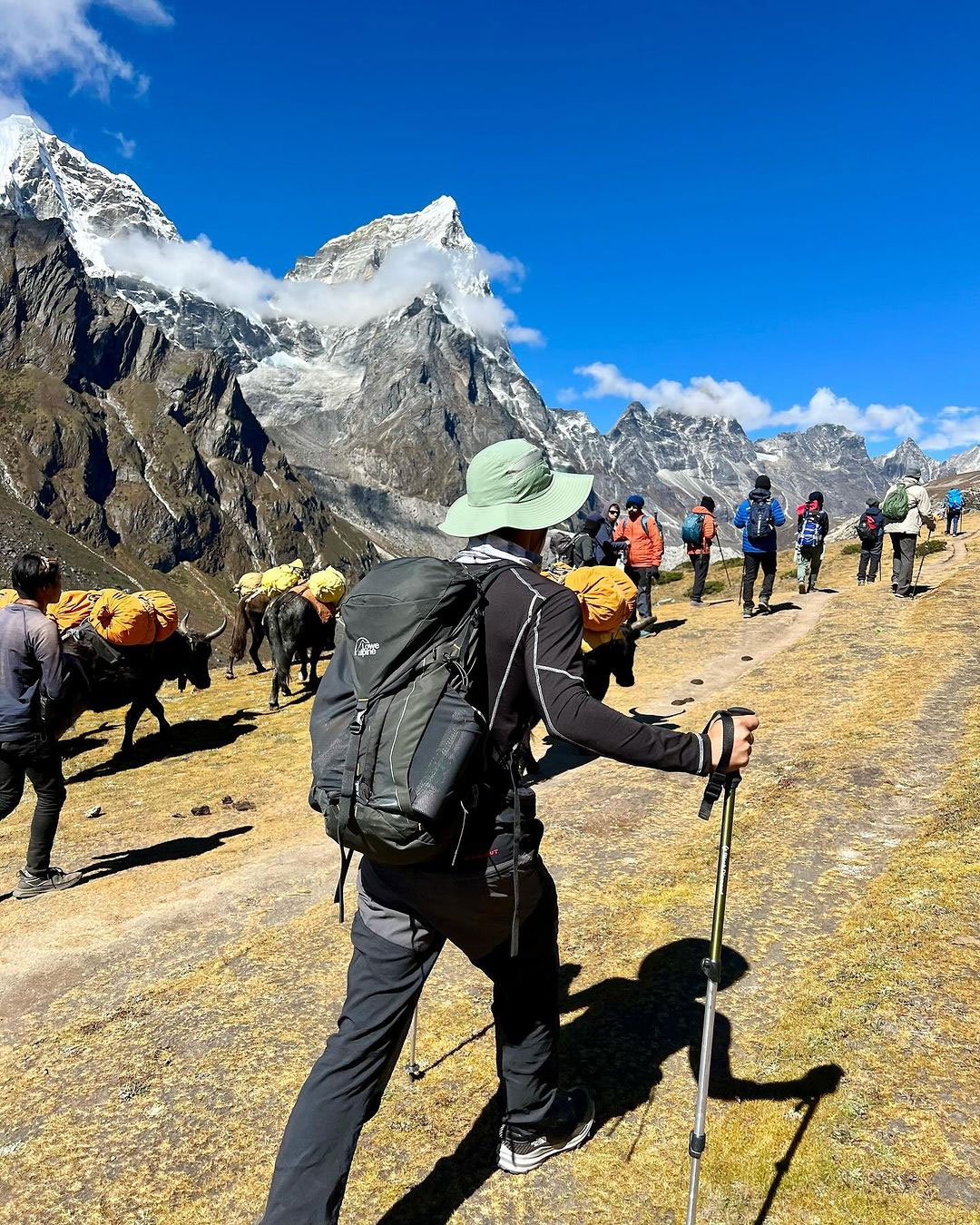
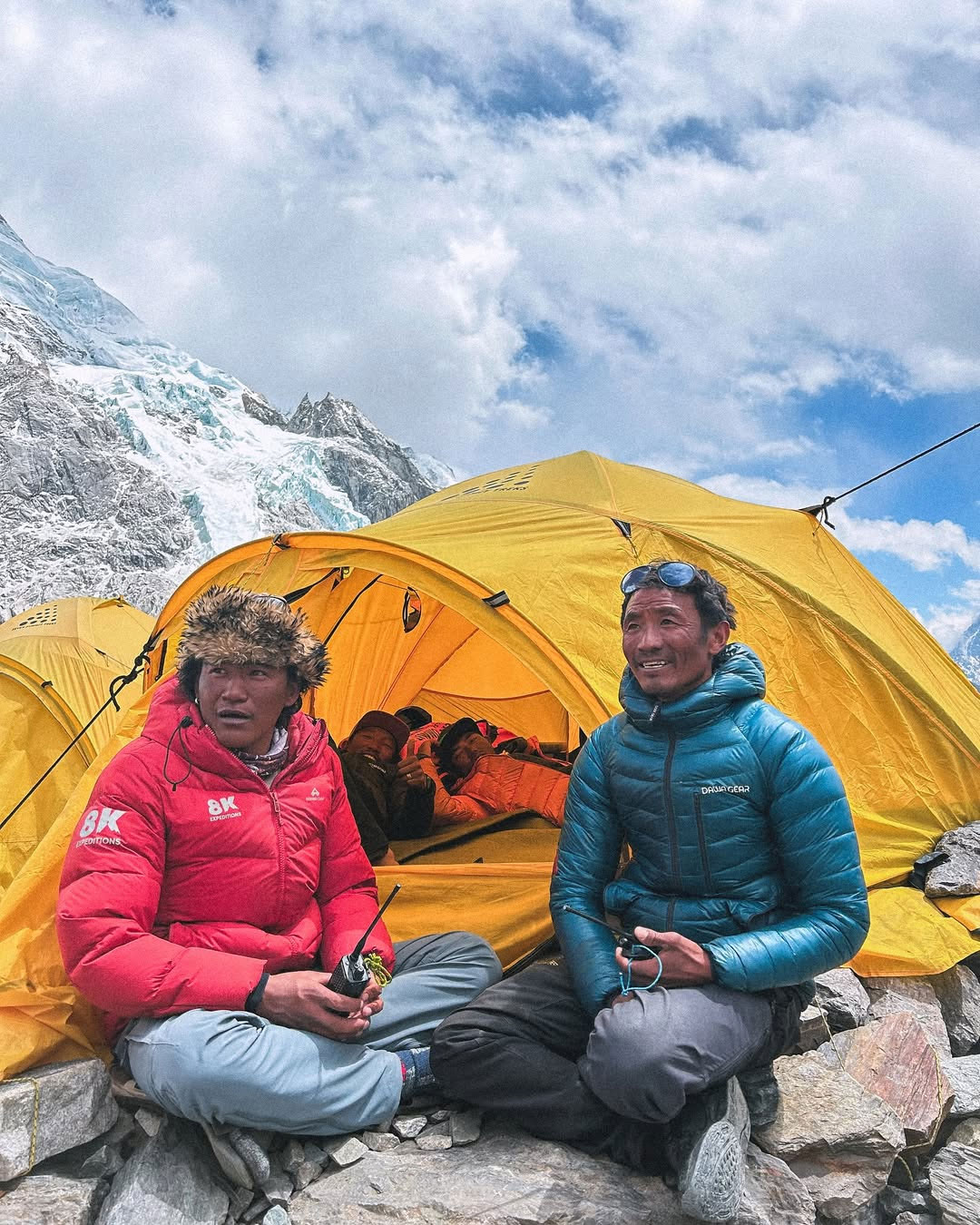
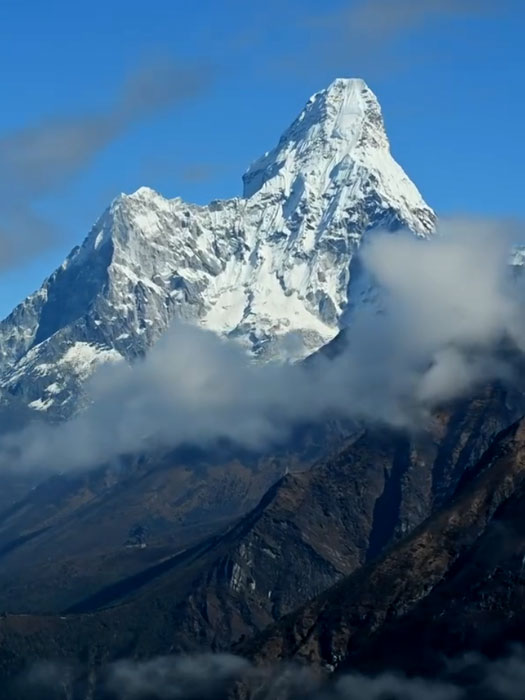
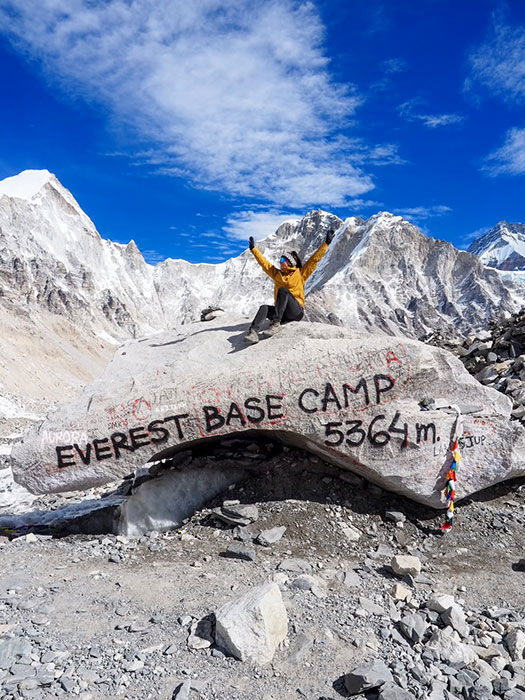
 By the time Base Camp comes into view, the world appears to have been stripped to its most elemental state. The glacier is in motion underfoot, complaining and moaning as it shifts. The massive wall of the Icefall is your first challenge, where the climbers will first encounter seracs and ladders, the signs of their upward struggle of climbing. Teams making preparations to head to the summit are housed in raucous clusters of colored tents on the grey moraine. It has a bizarre quality as you see an ephemeral human constellation at the base of an ancient giant; visually chaotic, but at the same time, deeply ordered. Given the harsh conditions, the comfort is deceptively well-organized at Base Camp on Everest.
Climbers use robust canvassed tents that are insulated for sleeping. Every expedition sets up a cooking/dining tent, which is usually heated and equipped with benches and tables, and often basic lights. Cooks make hot food like dal bhat, pasta, stews, noodles, rice, and hot tea to help maintain high energy and morale. People from all over the world gather here with the shared role of getting higher into the mountain, and as with most expeditions, wherever climbing is involved, tea and biscuits become a part of the daily routine.
 Even though it is not very elaborate, there is some medical aid available on the trail. Most trekking groups will have their own physicians and some limited equipment, such as portable oxygen cylinders, oximeters, and basic medications for altitude illness. Trekkers can also access the Himalayan Rescue Association's seasonal clinic in neighboring Pheriche, if problems worsen. The clinic provides professional medical care and recommendations for high-altitude issues, to help deal with complications and provide safety at high altitudes. Satellite devices are significant for communication at Base Camp. There is Everest Link Wi-Fi at some trekking routes, but Base Camp has a slow and expensive connection.